We Build Games Where Ideas Feel Physical.
A glimpse into the workshop, the rituals, and the collaborative spirit that powers Clickaro Pro. This is not a SaaS dashboard. It’s a living creative environment.
01 / Space as a Tool
The Rome Atelier: Where Code Meets Canvas
The Converted Warehouse
Our home in Testaccio isn't just an office. The central 'game lab' features modular stations, but its true power is the wall-sized projection surface. Daily playtesting isn't an event; it's a constant, ambient feedback loop that bleeds into the architecture.
The Analog Wall
A physical collision of ideas: printouts of Italian art postcards, torn hardware components, and frantic game sketches. This wall isn't curated—it's alive. It's our primary brainstorming tool, where digital precision meets tactile chaos.
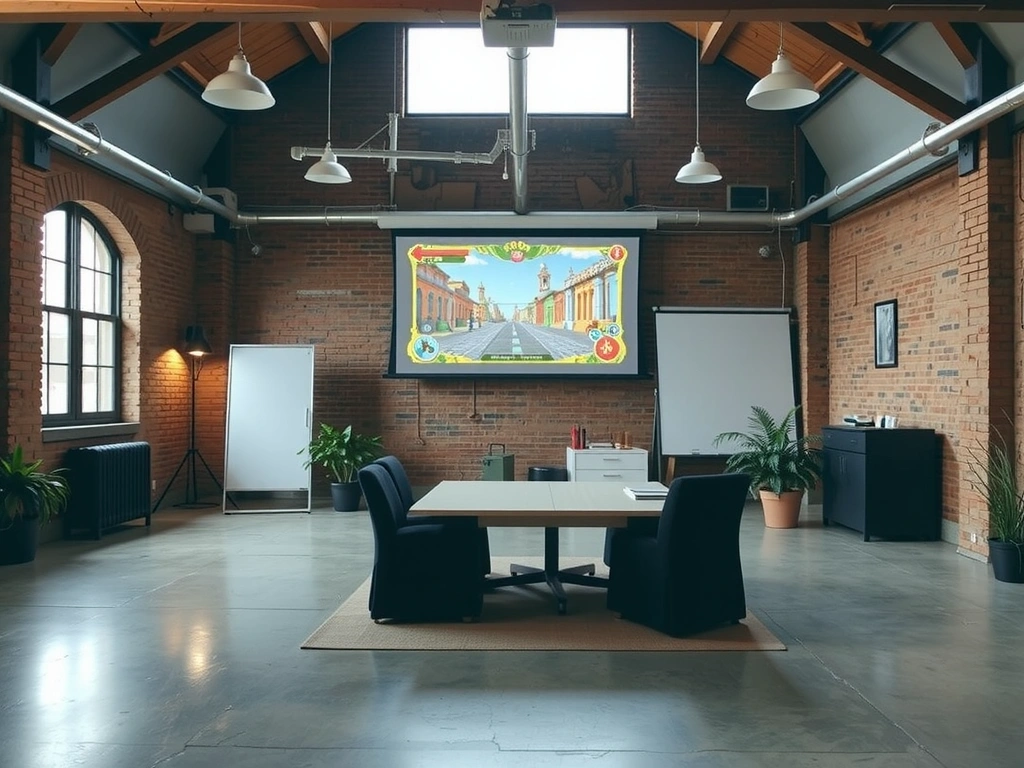
Game Lab & Projection Surface
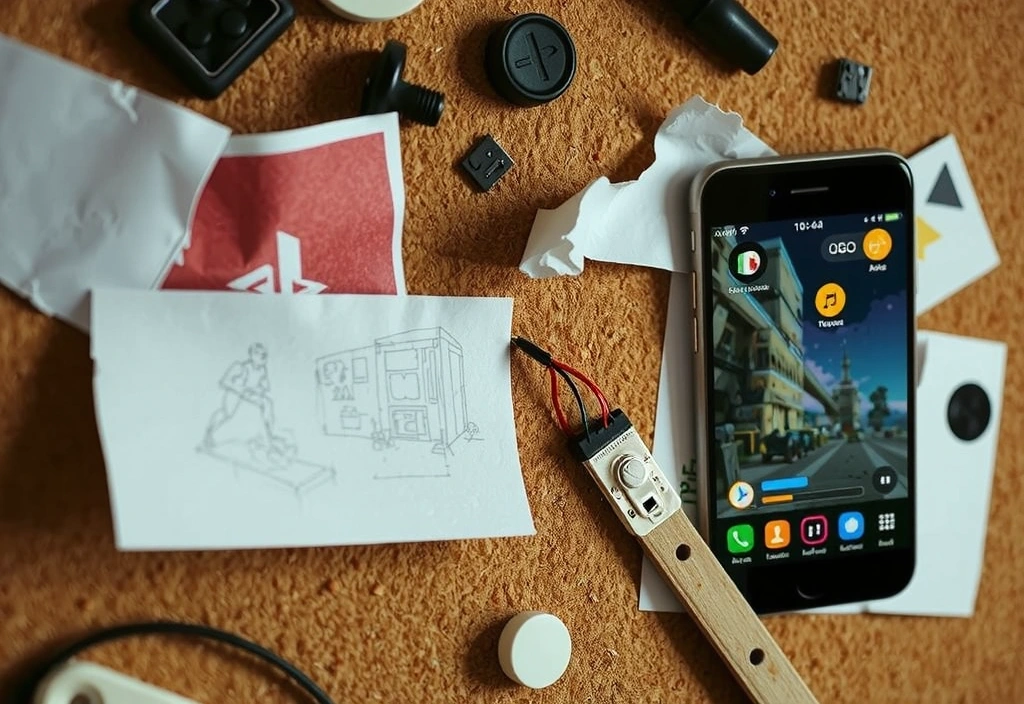
The Analog Wall
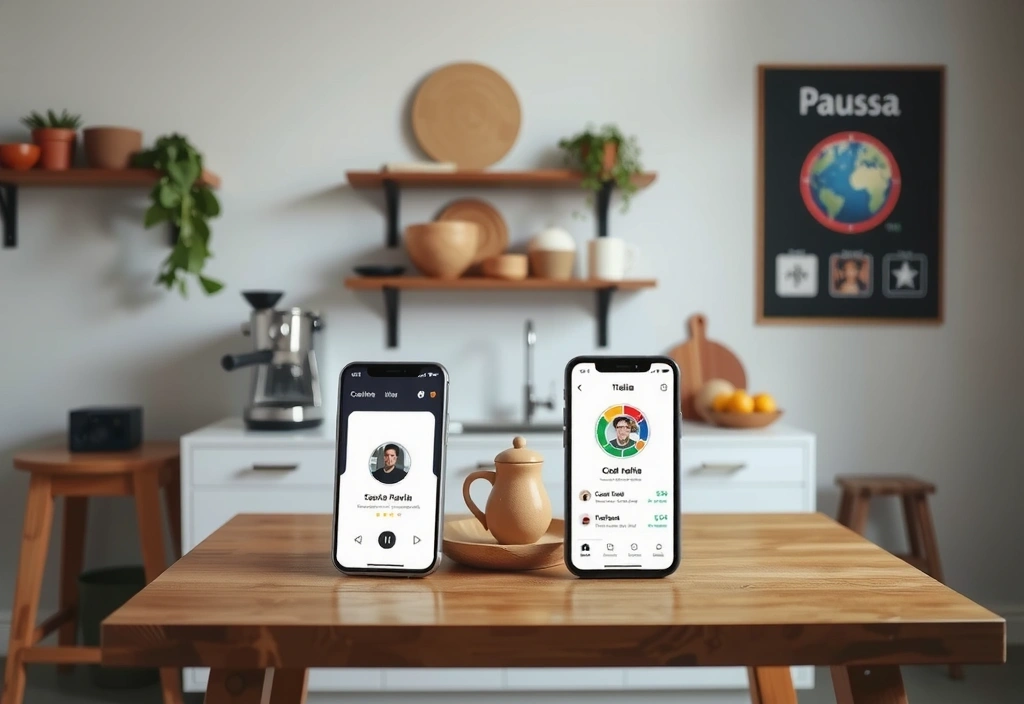
The Pausa (Kitchen)
Trade-off Frame
Feature Depth vs. Development Time
Benefit
A meticulously hand-crafted "Quiet Room" deep-focus space increases output quality for complex systems like narrative coding.
Cost
Dedicated physical space and acoustic treatments require capital investment and ongoing maintenance overhead.
Mitigation
We limit deep-focus days (e.g., 'No-Meeting Wednesdays') and use the space as a priority booking system, not an exclusive privilege.
Method Note
Evaluating Creative Environments
We assess our workspace impact through specific, non-financial metrics. We track 'Uninterrupted Deep Work Hours' logged via internal tooling (aiming for 15+ hrs/week/engineer). We conduct quarterly anonymous 'Space Pulse' surveys measuring perceived noise, light quality, and psychological safety for sharing half-formed ideas.
Crucially, we don't measure 'productivity' by lines of code. We look at the 'Breakthrough Idea Hit Rate'—ideas generated in physical spaces that later become documented game mechanics. The studio's success is judged by its ability to foster collisions, not just execute tasks.
02 / The Human Engine
The Clickaro Crew: A Mosaic of Talents
Operational Constraints
- Team size: Fixed at 12 (no infinite scaling)
- Budget: Indie-level, no VC funding
- Tooling: Must justify ROI per license
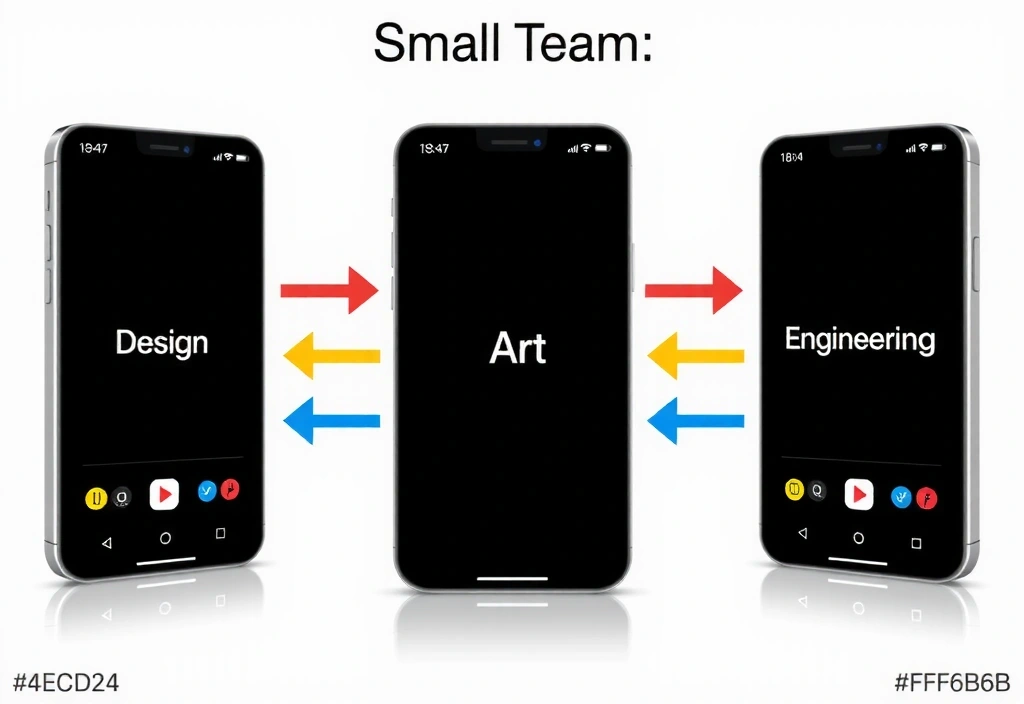
Cross-Functional Collision
Core Disciplines
Game Design
3 (2.5 yrs avg. tenure)
Engineering
4 (3.1 yrs avg. tenure)
Art & UI
3 (4.2 yrs avg. tenure)
Audio & Narrative
2 (3.5 yrs avg. tenure)
*Note: 30% of staff hold formal certifications in a secondary discipline.
The Bridge Role: Creative Technologists
We don't just have programmers. We have two Creative Technologists whose KPI is translating artistic vision into feasible, performant code without losing the 'soul.' They sit between the Art lead and the Engineering lead, speaking both languages fluently.
Field Note
"A brush stroke isn't just a texture. It's a performance cost, a memory allocation. My job is to find the cheapest way to make it feel expensive." — Creative Technologist, 2 yrs at Clickaro
A Typical Tuesday: 11:15 AM
QA flags a subtle UI bug where a button press feels "mushy" on older devices. A 15-minute huddle forms: the UI Artist, the Engine Programmer, and the Sound Designer. The fix isn't just a code patch; they re-time the animation by 30ms and add a micro-sound effect to restore perceived responsiveness. It's a trio solution.
03 / Lessons from the Lab
Common Studio Pitfalls & How We Avoid Them
The Mistake
Designing a completely open floor plan to foster "collaboration," only to create a culture of constant interruption where deep work is impossible.
Our Mitigation
We have dedicated 'Quiet Rooms' with booking systems and a clear 'Do Not Disturb' signal (a small flag on the desk). Collaboration happens in zones: social kitchen, the lab, or scheduled huddle rooms.
The Mistake
Adopting every new project management or creative tool, creating a fragmented workflow where context lives in 10 different apps.
Our Mitigation
Our 'Rule of Three': We commit to a core stack (Jira, GitHub, Figma) for 18 months minimum. Any new tool must undergo a 30-day trial with a cross-disciplinary team, and must integrate with the existing stack via API.
The Mistake
Treating creative rituals as rigid meetings. The mandatory 'Show & Tell' becomes a chore, filled with defensive presentations and no real dialogue.
Our Mitigation
We keep 'Show & Tell' voluntary and unscripted. The key rule: you must show a *work-in-progress*, not a finished product. This removes pressure and invites genuine, problem-solving feedback.
Does Your Creative Process Have These Guardrails?
A strong studio culture isn't about perks. It's about building systems that protect deep work, foster honest collaboration, and translate vision into shipped games.